


LocaLuv
4.2390.00 Reviews
App Specs
- Version
- 1.1.3
- Updated On
- License
- Free
- Downloads
- 100,000+
- Developer
- MotionMedia
- Categories
- Social
- Platform
- Android
Screenshots
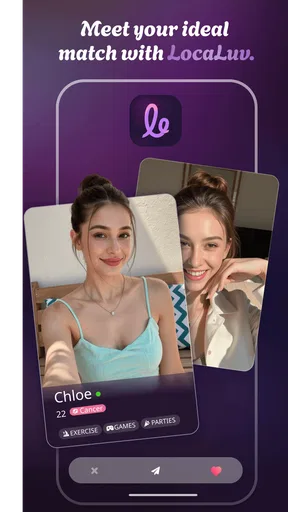
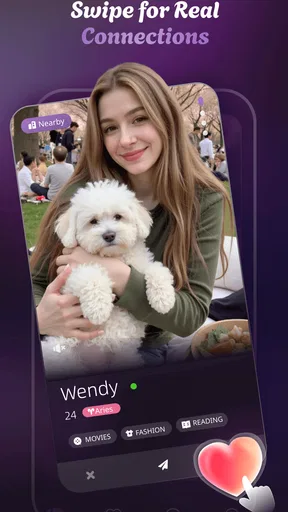



 Analysis by AppCompare
I approached LocaLuv as a practical social app rather than another service promising to solve every relationship problem. Its central idea is easy to understand: help people find a person who feels closer to their everyday life. After spending time with it, my view is that its appeal comes less from novelty and more from focus. It is designed for users who want social discovery with a local, personal angle, not an endless stream of distant profiles or a broad social network full of unrelated posts.
That focus also explains its limits. LocaLuv can make the first step toward meeting people feel more direct, but it cannot remove the uncertainty that comes with online interaction. You still need patience, sensible boundaries, and a willingness to judge conversations for yourself. I would recommend it to adults who want to explore nearby connections and are comfortable with a mature social environment. I would not choose it as my only option if I wanted a highly established platform, extensive profile controls, or a large range of specialized matching tools.
How the local approach changes the experience
LocaLuv belongs to the social category, and MotionMedia presents it with the simple store summary “LocaLuv:Find Your Person.” That phrase captures the intended mood, but the useful part is the local emphasis. In ordinary use, the idea is not merely to collect contacts. It is to make discovery feel connected to real life, where distance, availability, and the possibility of meeting can matter as much as a shared interest.
I found that distinction important when comparing it with the usual alternatives. Large dating services often give users many filters, polished discovery systems, and a huge pool of profiles. General social networks are better for keeping up with people I already know. Chat-focused apps can be excellent for conversation but are not always built around finding a new local connection. LocaLuv sits between those experiences: it feels more intentional than a general social feed, while remaining less intimidating than platforms built around constant swiping and heavy profile optimization.
That middle position is both its strength and its challenge. A focused app can feel calmer because the purpose is clearer, but it also depends heavily on the quality and activity of the people in your area. If the local community is lively, the concept makes sense quickly. If it is quiet, the app may feel less rewarding than a larger alternative with a broader audience.
The app is free to install, which makes trying it relatively easy. It is rated for Mature 17+ users, so I would treat it as an adult-oriented space and use the same care I would bring to any service involving new personal contacts. Optional in-app purchases range from $3.99 to $49.99 per item. That pricing detail matters because a free download does not necessarily mean every useful part of the experience is free. Before paying, I would first spend enough time to understand whether there are genuinely active people nearby and whether the additional purchase offers something I would actually use.
The first-use experience and what I would do differently
My advice is to begin with a modest profile rather than trying to write a perfect personal advertisement. A short description that says what kind of connection you are open to is more useful than a long list of vague qualities. The local angle works best when your profile gives someone an easy, natural reason to start a conversation. Mentioning a routine, a hobby, or the kind of social setting you prefer can be more inviting than relying on broad phrases about being fun or adventurous.
Worth Reading Before You Choose

EA SPORTS FC Mobile 26 Is a Bigger Football Game, but It Takes Time

Flipboard Shows What News Apps Must Do Beyond the Feed

Switching to Android Auto Means Rethinking Your Driving Routine

Google Calendar Makes a Crowded Week Easier to Manage

Ludo King Makes the Most of the Minutes Between Plans

Baby Panda World Brings Quick Play to Modern Phones, but Its Game Library Feels Busy
I would also avoid treating every new contact as a potential close relationship. The app is better used as a starting point for low-pressure discovery. A conversation can remain online until both people feel comfortable, and a first meeting should happen in a public place with someone you trust aware of the plan. That is not a criticism unique to LocaLuv; it is simply especially relevant when an app encourages connections based on proximity.
One practical workflow worked well for me: check the app at a consistent time, review new activity without rushing, respond to the conversations that show genuine effort, and then leave instead of endlessly browsing. This prevents local discovery from turning into a repetitive habit. It also helps reveal whether the service fits your routine. Someone who only wants occasional social discovery may enjoy this approach more than someone who expects a constantly refreshed stream.
A second useful habit is to separate curiosity from compatibility. A nearby person may seem appealing because the distance is convenient, but convenience alone is not a reason to share private details or arrange a meeting. I would look for respectful replies, clear communication, and consistency before moving the conversation elsewhere. The local focus should reduce practical obstacles, not lower your standards.
Where the app feels strongest
The clearest advantage is its sense of purpose. When I open a general social network, I may see news, entertainment, acquaintances, groups, and promotional posts before finding a meaningful conversation. LocaLuv is easier to understand because its social goal is narrower. That can make it attractive to someone who feels tired of noisy feeds and wants a more direct route to meeting people.
It is also a reasonable option for people whose social circle has become smaller through work, relocation, study, or changes in routine. A person who has moved to a new neighborhood may not be looking for a giant online community. They may simply want to discover whether there are compatible people close enough for a coffee, a walk, or a shared activity. In that situation, the app’s local identity can make the first interaction feel more relevant than a distant match.
I also appreciate that the service does not need to be treated as a formal dating commitment. Depending on how users present themselves and communicate, local discovery can support different kinds of adult social connections. That flexibility is useful, but it places more responsibility on the user to be clear. If you want friendship, dating, or something more specific, saying so early is kinder and more efficient than hoping the other person will guess.
The current version is 1.1.3, and the app supports Android 7.0 and later. That broad compatibility is helpful for people using older Android devices, although compatibility alone does not guarantee that every phone will feel equally smooth. I would keep the app updated and pay attention to how it behaves on your particular device, especially if you rely on an older handset for everyday communication.
The weakness that matters most
The biggest limitation is not a missing decorative feature; it is the uncertainty of a local network. An app can present a clear idea, but it cannot guarantee that the right people will be active at the moment you open it. This is the same problem smaller social services often face: the experience may be excellent for one person and disappointing for another simply because their area has a different level of participation.
That makes expectations important. I would not install LocaLuv expecting immediate results or a perfectly matched conversation on the first visit. Give it a fair trial, but do not interpret a quiet start as a personal failure. It may reflect the size or activity of the nearby community rather than the quality of your profile.
The other friction comes from the balance between free access and purchases. Since optional items can cost from $3.99 to $49.99, I would avoid spending impulsively just to improve the feeling of progress. Paid tools can be worthwhile only when they solve a problem you have already identified. If you are still unsure whether there are enough relevant users near you, paying more is unlikely to fix the underlying issue.
There is also a natural tension between local relevance and privacy. The closer a connection feels geographically, the more carefully I would manage personal information. I would not disclose my exact home address, workplace details, daily schedule, or other information that makes me easy to locate. The app may help people find connections nearby, but users should decide how much “nearby” they reveal and when.
Compared with a mature, high-volume alternative, LocaLuv may feel less comprehensive. A larger platform can be better if you want extensive filters, a very broad audience, or a familiar system with years of accumulated user activity. A general social network may be preferable if your goal is to participate in groups rather than meet individuals. LocaLuv makes more sense when locality and direct social discovery are the main priorities.
Who should try it, and who should skip it
I think LocaLuv is best suited to adults who want to expand their social options without joining a general-purpose network. It may be particularly useful for someone new to an area, someone whose existing friends are busy or far away, or someone who prefers the possibility of an in-person connection over conversations that remain permanently distant.
It can also suit users who dislike the pressure of presenting themselves as a polished personal brand. The strongest approach here is conversational and honest. You do not need to make every line impressive; you need to make your intentions understandable and give compatible people something real to respond to.
I would be more cautious about recommending it to anyone who is uncomfortable with local discovery, who wants complete anonymity, or who expects the app to filter out every unsuitable interaction. People seeking a tightly defined matching system may prefer a specialized alternative. Likewise, users who mainly want to share updates with existing friends will probably get more value from a conventional social network.
For a realistic everyday scenario, imagine finishing a demanding week after moving to a new city. You do not want to attend a large event alone, and your coworkers are not necessarily the people you want to socialize with outside work. You could use LocaLuv in short sessions to look for a nearby conversation, explain that you are hoping to meet people casually, and suggest a public coffee shop only after the exchange feels respectful and consistent. The app does not guarantee a friendship, but it can make that first search less abstract.
Another scenario is someone who has plenty of online contacts but very few people close enough to see regularly. For that person, the local focus may be more valuable than another broad feed. The trade-off is that they must accept a smaller pool and take more responsibility for deciding which conversations deserve attention.
My final view after using the app
LocaLuv is a focused social app with a sensible thesis: finding a person nearby can be more useful than accumulating distant digital contacts. I like its straightforward purpose and the way it encourages users to think about real-world compatibility, not just online attention. Its free entry point makes experimentation accessible, while the mature age rating appropriately signals that this is an adult social environment.
My recommendation comes with a clear condition: use it as one tool for local discovery, not as a promise of instant connection. Keep your profile honest, protect identifying information, judge conversations by behavior rather than proximity, and wait before paying for optional items. Those habits make the experience more useful and reduce the pressure to force a result.
MotionMedia has created something that may appeal to people who feel underserved by noisy social feeds and oversized matching platforms. It is not the strongest choice for everyone, particularly users who need a huge audience or advanced filtering. But if your priority is meeting adults who may realistically fit into your everyday surroundings, LocaLuv is worth exploring. Its real value is not the promise of finding “the one”; it is the chance to turn local curiosity into a more deliberate, human conversation.
With an average rating of 4.1 from around 2.8 thousand ratings and more than 100 thousand installs, the app has already attracted a meaningful early audience. I would still judge it by the activity in your own area rather than by store numbers alone. For the right user, that local test is the deciding factor—and it is the fairest way to determine whether this particular social app belongs on your phone.
Pros
- Helps discover nearby people with similar dating intentions.
- Location-based matching can make first dates more convenient.
- Simple interface is easy for new users to navigate.
- Useful for meeting people outside your usual social circle.
- Profile browsing can make local dating feel more spontaneous.
Cons
- Location sharing may raise privacy concerns for some users.
- Match quality can vary depending on the number of local members.
- Some useful features may require a paid subscription.
- Nearby matches may reveal your approximate location to others.
- Inactive or incomplete profiles can make browsing frustrating.
FAQs for LocaLuv
What is LocaLuv and how does it work?
LocaLuv is a location-based social and dating app designed to help people discover and connect with nearby users. After creating a profile, you can browse available members, review their photos and information, and interact through the app’s communication features. The experience depends heavily on your location, profile preferences, and the number of active users in your area.
Is LocaLuv free to download and use?
LocaLuv can generally be downloaded without an upfront charge, but some features may require in-app purchases, a subscription, or virtual credits. Basic profile browsing or matching may be available for free, while messaging, visibility boosts, advanced filters, or other premium tools could be restricted. Check the app’s current pricing and subscription terms before confirming any payment.
Does LocaLuv require my location and personal information?
Because LocaLuv is focused on nearby connections, it may request access to your location to show relevant profiles and local activity. You will also likely need to provide information such as an email address, age, photos, and profile preferences. Before registering, review the privacy policy and app permissions, and avoid sharing sensitive details until you trust another user.
Is LocaLuv safe for meeting and chatting with other users?
LocaLuv may include standard tools such as profile reporting, blocking, or moderation, but no dating or social platform can guarantee that every profile is genuine or trustworthy. Be cautious with requests for money, private documents, verification codes, or immediate off-platform contact. If you decide to meet someone, choose a public place, tell a friend, and use your own transportation.
What should I do if there are few users or matches near me?
The usefulness of LocaLuv can vary considerably depending on your city, age range, interests, and search distance. Smaller communities may have fewer active profiles, slower responses, or limited matching opportunities. You can improve results by completing your profile, using clear and recent photos, adjusting discovery filters carefully, and checking the app at different times as local activity changes.


